
Hernia Specialist in Navi Mumbai: Advanced Treatment & Surgery
- Dr Nitish Jhawar, with 26 years of experience
Book An Appointment
Patients seeking effective hernia treatment in Navi Mumbai benefit from a clinical approach based on surgical mastery & ensure safety.
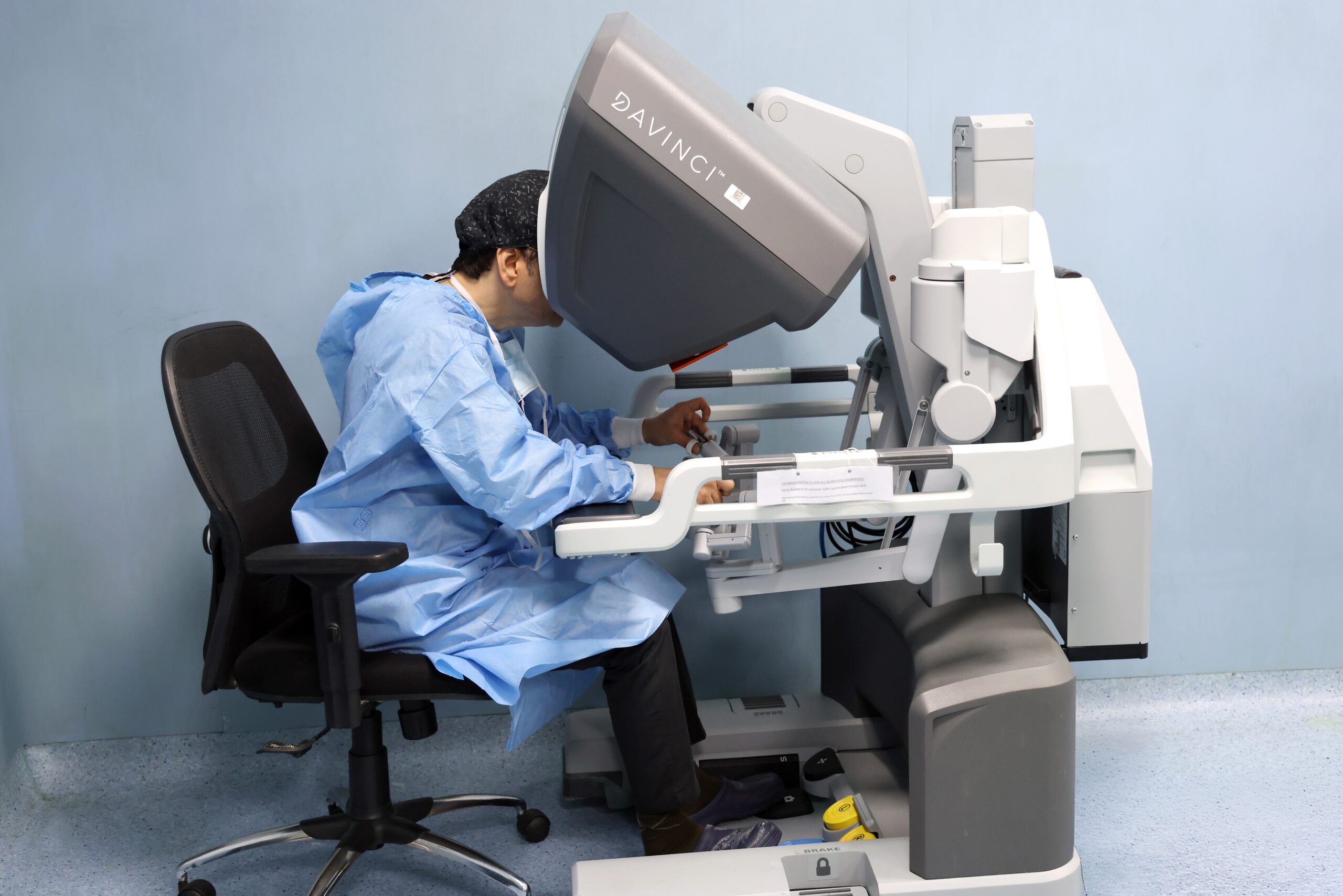
Dr. Nitish Jhawar, a senior Hernia specialist with over 26+ years of experience, specializes in tension-free mesh repairs using Laparoscopic and da Vinci® Robotic technology at Apollo Hospital Belapur.
Modern techniques allow the abdominal wall defect to be repaired with smaller incisions, faster recovery, and lower recurrence risk.
Consultations:
Dr. Jhawar is also available for outpatient evaluation and hernia diagnostics at Neoalta Specialty Clinic (Vashi), serving patients from Vashi, Nerul, Koparkhairane, and the wider Mumbai region.
What is a Hernia?
A hernia occurs when an organ or tissue pushes through a weak spot in the muscle or abdominal wall.
This results in a noticeable bulge in the groin or abdomen, which may become more visible while standing, coughing, or lifting weight.
In many cases the swelling may reduce when lying down.
Most hernias do not heal on their own. Over time, the weakness in the muscle wall may enlarge, leading to increased discomfort and possible complications.
Early evaluation helps determine the type of hernia and the most appropriate treatment.
Why Does a Hernia Develop?
Hernias usually develop when muscle weaknes and strain. The weakness may be present from birth or may develop over time as tissues lose strength.
Common factors that increase this pressure include:
- Heavy lifting or sudden physical strain
- Chronic coughing or sneezing
- Obesity or weight gain
- Pregnancy or Previous abdominal surgery
- Genetic and Aging related tissue weakening
When pressure repeatedly acts on a weak area of the abdominal wall, a hernia can gradually form.
When is Hernia Surgery Necessary?
While some small, asymptomatic hernias can be managed with “Watchful Waiting” under medical supervision, most hernias require surgical repair to prevent progression.
Unlike a muscle strain, a hernia is a mechanical defect in the abdominal wall that will not resolve on its own.
Primary Indicators for Surgery: Symptoms of Hernia
Dr. Nitish Jhawar recommends evaluation by hernia specialist, if you experience any of the following clinical signs:
- Visible Bulge: A noticeable bulge or lump at the hernia site, which may become more prominent when standing, bending, or straining.
- Pain or Discomfort: A hernia can cause discomfort or sharp pain, more so during physical activity or when lifting.
- Pressure or Heaviness: A sense of pressure or heaviness in the affected area, often accompanied by a burning sensation.
- Digestive Issues (For Abdominal Hernias): Some hernias can cause digestive problems, such as nausea or constipation.
In this video, Dr. Nitish Jhawar, senior laparoscopic और robotic hernia surgeon Navi Mumbai explains about hernia symptoms, types and when to do hernia surgery.
What Happens if a Hernia is Not Treated?
If hernia is not treated, it can lead to serious complications over time:
- Enlargement and Increased Pain: Hernias tend to grow larger, causing more discomfort and limiting physical activity.
- Incarceration: The hernia may become trapped, causing severe pain, swelling, and digestive issues. Incarceration requires urgent medical attention.
- Strangulation (Medical Emergency): Blood flow to the trapped tissue can be cut off, leading to tissue death. Symptoms include intense pain, nausea, vomiting, and discoloured skin over the hernia. Strangulation can be life-threatening if not treated immediately.
- Bowel Obstruction: In abdominal hernias, the intestines may become blocked, causing severe bloating, nausea, and vomiting.
- Impact on Quality of Life: Chronic pain and discomfort can severely limit daily activities and cause emotional stress.
Early treatment prevents these risks, improving outcomes and quality of life.
Don’t wait for complications—schedule your consultation today for expert hernia treatment!
What Are Different Types of Hernias Treated?
Based on different types of hernia, Dr. Jhawar will determine different clinical approaches for surgery.
Inguinal Hernia:
This type of hernia occurs when tissue pushes through a weak spot in the abdominal wall into the inguinal canal. It predominantly affects men and can result in a bulge in the groin area, often causing pain when coughing or bending.
Umbilical Hernia:
It occurs when part of the intestine protrudes through the abdominal muscles near the belly(umbilicus). This type of hernia is common in infants, but it can also affect adults, especially women who have had multiple pregnancies.
Incisional Hernia:
This type of hernia can develop at the site of a previous surgical incision, where the abdominal wall has weakened, allowing tissue to push through. Incisional hernias are more common after abdominal surgeries, particularly if the incision did not heal properly.
Femoral Hernia:
This type is less common and occurs when tissue pushes through a weak spot in the muscle wall near the femoral artery in the upper thigh. Femoral hernias are more common in women and can lead to significant discomfort, especially when walking or bending.
Hiatal Hernia:
A hiatal hernia occurs when part of the stomach pushes up through the diaphragm into the chest cavity. This type of hernia may not cause an external bulge but can result in symptoms like acid reflux, heartburn, and difficulty swallowing.
Each type of hernia has its specific challenges, but all can worsen without medical intervention.
Hernia Treatment Options in Navi Mumbai: Laparoscopic & Robotic
In Navi Mumbai, two advanced and minimally invasive options for hernia repair are Laparoscopic Hernia Surgery and Robot-Assisted Hernia Surgery.
Both techniques offer quicker recovery compared to traditional open surgery.

Laparoscopic vs. Robotic Hernia Surgery Comparison Table
Here is the comparison table doe lap and robotic assisted hernia surgery:.
Feature | Laparoscopic Surgery | Robotic-Assisted Surgery (da Vinci®) |
Technology | Handheld tools & 2D/3D camera. | Surgeon-controlled robotic arms & 3D-HD vision. |
Precision | Standard surgical precision. | Enhanced 360-degree wrist maneuverability. |
Best For | All types of hernia – inguinal, umbilical hernias. | Complex, recurrent, or bilateral hernias. |
Incisions | 3 Small “keyhole” incisions. | 3-4 Small, precise ports. |
Recovery | 3–5 days for light activity. | 3-5 days |
Laparoscopic Hernia Repair at Apollo: Dr Nitish Jhawar
This is the “gold standard” treatment option for most standard hernias.
It involves inserting a camera (laparoscope) and specialized tools through small incisions to place a mesh and reinforce the abdominal wall.
Read More About Laparoscopic Hernia Surgery in Navi Mumbai
Robot-Assisted Hernia Surgery
Robot-assisted Hernia surgery at Apollo Hospital, Navi Mumbai is the advanced hernia treatment option.
It provides the surgeon with superior 3D-HD visualization and precision, making it preferred choice for complex Abdominal Wall Reconstruction and cases where previous repairs have failed.
Read About Robotic hernia Surgery in Navi Mumbai
Dr. Nitish Jhawar provides specialized consultation and advanced surgical care for all types of abdominal and groin hernias.
Read More About Hernia Specialist at Apollo Hospital, Navi Mumbai
What our Patients Say
Why Choose Dr. Nitish Jhawar for Hernia Treatment & Surgery?
Dr. Nitish Jhawar is a senior Hernia Specialist Surgeon in Navi Mumbai with over 26+ years of surgical experience in laparoscopic and robot assited surgery.
Surgical Expertise: Thousands of successful laparoscopic and robotic hernia repairs performed.
Technology & Precision: Specialized in Tension-Free 3D Mesh repairs for inguinal, umbilical, and complex incisional hernias.
Institutional Authority: Senior Consultant at Apollo Hospital (Belapur), and Neoalta Specialty Clinic (Vashi).
Clinical Outcomes: Dedicated patient centric care with successful outcomes and effective hernia surgery experience in Navi Mumbai.
Patients at Apollo Hospital can avail of cashless treatment for all hernia-related procedures.
To Book Consultation WhatsApp or Call 9833290590
FAQ About Hernia Treatment in Navi Mumbai
No, hernias typically do not heal on their own. Over time, they can grow larger and may cause complications such as pain, incarceration, or strangulation.
Surgery is the most effective treatment to repair a hernia and prevent further health risks.
Recovery after hernia surgery is typically faster compared to open surgery.
Most patients return to light desk work within 7-8 days. Walking is encouraged immediately. Heavy lifting and strenuous exercise are typically restricted for 4-6 weeks to allow the mesh to integrate fully.
Pain after hernia surgery is usually mild to moderate, especially with laparoscopic & Robotic techniques.
Most patients experience manageable discomfort, which can be controlled with prescribed pain medication, and this discomfort diminishes significantly within a few days.
Delaying hernia surgery increases the risk of complications, such as the hernia enlarging, causing more pain, or becoming incarcerated or strangulated.
Both are medical emergencies requiring immediate hernia surgery at a facility like Apollo Hospital.
Laparoscopic and robot assisted hernia surgery are minimally invasive, using small incisions to repair the hernia, resulting in less pain, quicker recovery, and minimal scarring.
Open surgery involves a larger incision and generally requires a longer recovery period.
Expert Hernia Treatment in Navi Mumbai
Named as a top-rated Hernia Specialist in Navi Mumbai, Dr. Nitish Jhawar ((26+ years experience) provides a structured evaluation for patients from Navi Mumbai, Vashi, Koparkhairane, Nerul, Belapur and kharghar for all abdominal and groin swellings (all types of hernias) at Neoalta Clinic and Apollo Hospital, Belapur.
Book your appointment now at 9833290590