
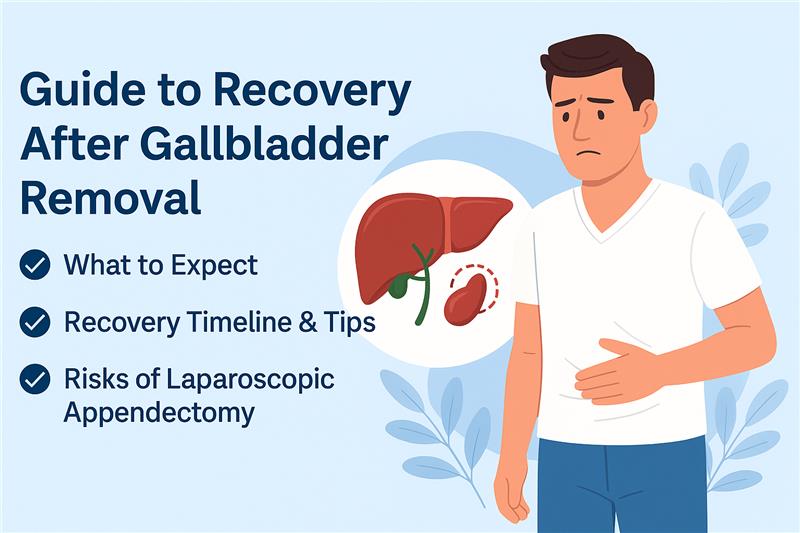
Recovering after laparoscopic gallbladder removal can bring a lot of questions, especially about what is normal and how long it takes to get back to routine life.
This guide gives you a clear recovery timeline after gall bladder surgery, explains common symptoms, and gives you simple steps to help you heal faster. Our aim is to give you simple, reliable, and medically accurate information so you can feel confident during your healing process.
Laparoscopic cholecystectomy is the most common type of surgery to remove the gallbladder. It uses small cuts, a camera, and precise tools. Because the approach is minimally invasive, recovery is easier than with open surgery. However, your body will still need to get used to some real changes.
Your liver still makes bile, but because the gallbladder isn’t there to store it, it goes straight into the intestine. This change is why digestion may feel different for a few weeks.
Everyone heals differently, but most patients follow a pattern that is pretty consistent.
First 24 to 48 hours
You might feel tired, a little sore, and bloated but it usually goes away quickly.
Walking is good for you because it helps reduce the gas pain after the procedure. Your body can handle light meals better.
Days 3 through 7
Most of the things you have to do every day seem doable. After meals, you might still have loose stools or mild cramps. This is normal because your body is getting used to the constant flow of bile. Make sure your meals are small and regular.
Week 2
You feel better and have more energy. At this point, a lot of patients go back to work in an office. You should still wait to lift heavy things.
Weeks 3–6
Your digestive system gets back to normal. Most people can go back to their normal lives and exercise without any problems. If you still have diarrhea or pain that won’t go away, your care team may suggest changing your diet or taking medicine to control your bile.
For more information on how to make long-term changes to your digestion, check out our Healthy Recovery After Surgery Guide
After Gall Bladder surgery, your gut takes a few weeks to adjust. Low fat and high fiber meals are easier to digest and reduce bloating and diarrheas in this phase.
You can eat oats, dal, khichdi, curd, steamed vegetables, soft chapati, rice, idli, poha, upma and fruits like banana or papaya.ean proteins such as steamed fish, egg whites, or skinless chicken are usually tolerated well. Maintain your hydration.
For the first 2–3 weeks, avoid fried food, heavy gravies, red meat, ghee, butter, cheese, and very spicy meals, as they often trigger cramps or loose stools. Gas-forming foods like cabbage, rajma, chana, and fizzy drinks may also cause discomfort initially.
If stools are loose, increasing soluble fibre such as oats or a small bedtime dose of isabgol, usually helps. Most patients can return to regular home-cooked food gradually over 3–4 weeks, depending on personal comfort.
Making a few small changes can help you heal faster and feel more like yourself again.
Stay active in a gentle way
Walking for a short time helps blood flow and eases stiffness. Pay attention to what your body is telling you and slowly increase the distance.
Help your incision sites heal.
Make sure the area is clean and dry. Don’t wear clothes that are too tight and rub the incision.
Know what is normal after gall bladder surgery
You should expect gas pain, mild diarrhea, light fatigue, and changes in your digestion that don’t last long. Most of the time, they get better in a few days or weeks.
When to call your doctor
You should see a doctor if you have a fever, pain that gets worse, vomiting that won’t stop, jaundice, or swelling around the cuts. Check in early and trust your gut. Knowing the risks and problems that can come up with laparoscopic gallbladder surgery.
Laparoscopic gallbladder removal is considered very safe and is one of the most commonly performed surgeries worldwide. Most patients recover smoothly within a few days. Still, understanding the potential risks can help you recognise warning signs early and seek timely care.
Minor wound infections can occur after any surgery. Watch for symptoms like redness, swelling, warmth, fever, or discharge from your incision. Early treatment with antibiotics usually resolves this quickly.
Sometimes, small bile ducts close to the gallbladder can leak bile after surgery. Signs include persistent abdominal pain, fever, nausea, or a feeling of fullness. Your surgeon may use a drain or endoscopic procedure (ERCP) if needed.
Although rare, the common bile duct, intestines, or surrounding tissues may be injured during surgery. This is uncommon, especially in experienced hands, but severe pain, jaundice, or prolonged digestive issues should be evaluated urgently.
Minor internal bleeding can occur but is usually controlled during surgery. If you experience dizziness, faintness, or persistent abdominal pain, contact your doctor immediately.
Any surgery carries a small risk of blood clots. Early walking, staying hydrated, and following post-op instructions help reduce this risk.
After gallbladder removal, some patients experience bloating, loose stools, or difficulty digesting fatty foods. These usually improve over a few weeks as the body adapts.
Being aware of these possible risks helps you identify symptoms early and get the right treatment on time.
This guide is mostly about laparoscopic gallbladder removal, but a lot of patients also ask about the laparoscopic appendectomy, which is another common minimally invasive procedure. It is similar to gallbladder surgery, but the risks are a little different because appendicitis usually means an infection. Read more about Care After Laparoscopic Appendectomy
Most people recover in about 2 weeks after laparoscopic surgery and can return to light activity; full recovery may take a few more weeks depending on one’s health.
Yes — mild diarrhea is common after surgery, because bile flows directly into your intestines; it usually settles over weeks to a few months.
You should avoid heavy lifting for at least 2 weeks, and then gradually reintroduce strength training only after your surgeon approves.
Avoid high-fat, greasy, fried, or processed foods, as well as full-fat dairy, to prevent digestive issues like bloating and diarrhea.
Yes — most people live completely normal lives without a gallbladder; over time, the body adapts to digest fat even without it.
Every year, Dr Nitish Jhawar, laparoscopic & robotic surgeon in Navi Mumbai, performs thousands of minimally invasive gall bladder surgeries. Every suggestion we make here is based on that experience. We want to make your recovery easier, less stressful, and clearer so you can focus on healing instead of guessing.
If you are preparing for gallbladder surgery or already recovering and want advice tailored to your health, get in touch with our expert. Our team make sure that every plan fits your needs exactly, and we are there for you every step of the way as you recover.
Make an appointment today and feel surer about what comes next